Cold vs. heat for headaches: which and when
⚡ Key takeaways
- Use COLD for migraines, throbbing pain, sinus pressure and puffy eyes — cold constricts dilated vessels, slows pain signals, and numbs the area.
- Use HEAT for tension headaches — warmth increases circulation and relaxes tight neck and shoulder muscles that drive tension-type pain.
- When in doubt, start with cold. Throbbing is a sign of a vascular headache where heat can make things worse by dilating vessels further.
- Apply cold for ~15–20 minutes with a fabric barrier; heat should be warm, not hot — never apply directly to bare skin.
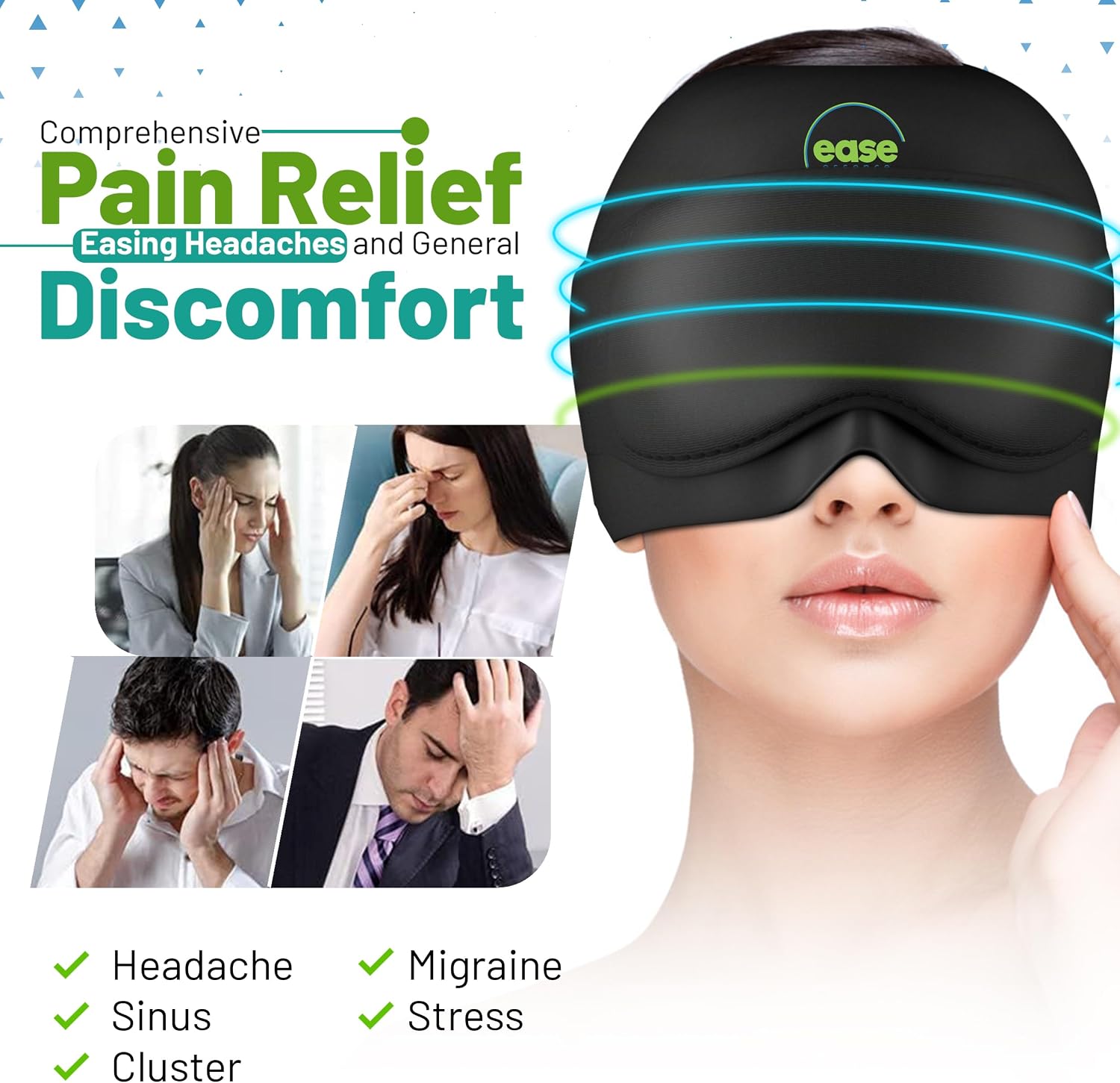
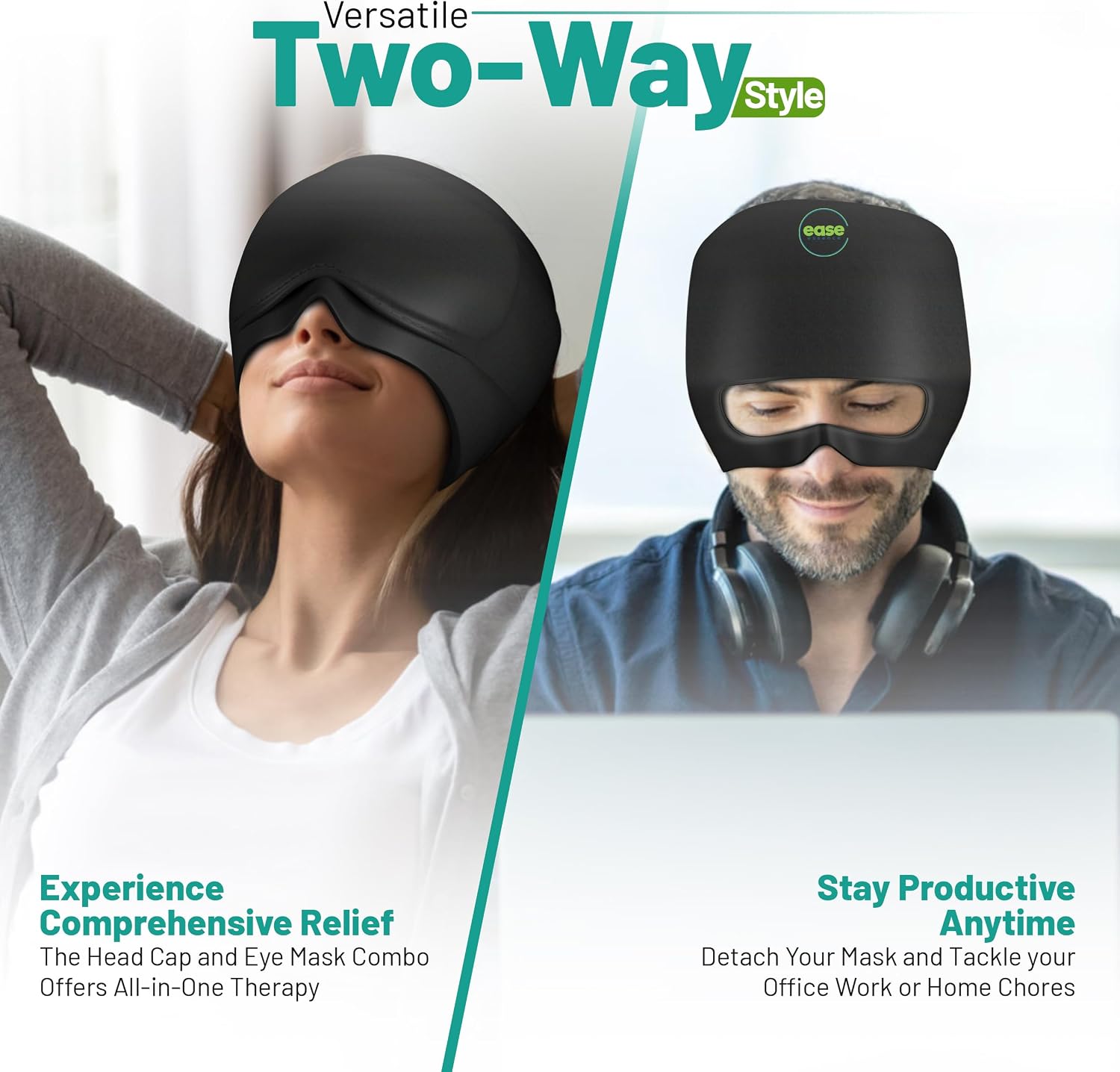
- One cap can do both. The Ease Essence cap freezes for cold therapy or microwaves for heat — no need for two separate products.
Pressing something cold or warm to a painful head is one of the oldest forms of self-care. Both work — but they work for different reasons, on different kinds of headaches. Reaching for the wrong one can leave you no better off, and in rare cases it can make a migraine worse. This guide gives you a clear, practical answer so you always reach for the right thing.
The quick answer
Reach for cold when the pain is throbbing or pulsing, when light or sound sensitivity is involved, when sinus pressure is building, or when your eyes are puffy and swollen — these are signs of a vascular or inflammatory headache, most commonly a migraine. Cold constricts swollen blood vessels, numbs the area, and damps down the pain signal. The American Migraine Foundation lists cold compresses among practical drug-free comfort measures for migraine attacks.
Reach for heat when the pain feels like a tight band around your head, when your neck or shoulders are stiff and knotted, or when stress or tension is clearly the trigger — these are signs of a tension-type headache. Heat relaxes contracted muscles, increases local circulation, and eases the grip-like sensation that tension headaches produce.
A simple rule: throbbing = cold; tight = heat.
Cold vs. heat at a glance
| Symptom / situation | Best therapy | Why it helps |
|---|---|---|
| Throbbing or pulsing pain | Cold | Constricts dilated blood vessels |
| Migraine attack | Cold | Vasoconstriction + nerve numbing |
| Sinus pressure or congestion | Cold | Reduces local inflammation and swelling |
| Puffy or sensitive eyes | Cold | Numbs and de-puffs periorbital tissue |
| Tight band across forehead | Heat | Relaxes muscle tension |
| Stiff neck or tight shoulders | Heat | Increases circulation, loosens knots |
| Stress or tension headache | Heat | Muscle relaxation breaks the pain loop |
When to reach for cold
Cold therapy works on the underlying mechanics of vascular headaches. During a migraine, the blood vessels around the head dilate and become inflamed, and the trigeminal nerve system amplifies pain signals. Applying cold does three things:
- Vasoconstriction. Cold causes blood vessels to narrow, which can reduce the pulsing pressure created by dilated, irritated vessels.
- Slowing nerve conduction. Lower tissue temperatures reduce the speed at which nearby sensory nerves transmit pain signals — effectively turning down the volume.
- Numbing. The competing cold sensation partially masks the pain through the body's own sensory gating, while gently numbing the area under the cap.
Cold is particularly helpful for migraines, sinus headaches with congestion and facial pressure, hormonal headaches that have a throbbing quality, and headaches where light sensitivity (photophobia) is present — the Ease Essence eye mask blocks light while the gel cap delivers cold simultaneously.
For a deeper look at the science behind cold and migraine, see our article on why cold therapy stops a migraine in its tracks.
When to reach for heat
Tension headaches are the most common headache type. They often arise from sustained muscle contraction — hunching over a screen, clenching your jaw, or holding a stressful posture for hours. The resulting tightness in the neck, shoulders, and scalp muscles creates referred pain across the forehead and temples that feels like a dull, pressing ache rather than a throb.
Heat addresses this at the source:
- Increased circulation. Warmth dilates local blood vessels and improves blood flow to tight, oxygen-deprived muscles.
- Muscle relaxation. Heat encourages the muscle fibers themselves to release tension, breaking the contraction-pain-contraction cycle.
- Calming effect. Warmth activates parasympathetic (rest-and-digest) responses that can lower overall stress arousal — helpful when the headache has a clear stress trigger.
Apply heat to the back of the neck, the base of the skull, and across the shoulders — wherever the tightest muscles are. If the headache is purely tension-driven with no throbbing component, gentle warmth can be more comfortable than cold.
One important caution: if you are unsure whether your headache is tension-type or migraine, start with cold. Applying heat to a migraine can dilate vessels further and make throbbing pain worse.
Can you alternate? (contrast therapy)
Some people find that alternating cold and heat — sometimes called contrast therapy — is helpful, particularly for headaches that seem to have both a tension and a vascular component. The typical approach is to apply cold for 10–15 minutes to calm any throbbing, then switch to warmth to relax the surrounding muscles.
A few cautions before trying this:
- Keep each session short (10–15 minutes per mode) and take a break in between.
- Always use fabric between cold gel and bare skin; ensure heat is warm, not hot.
- If alternating makes either the throbbing or the tightness worse, stop and stick to one therapy.
- Contrast therapy is not a standard medical recommendation — it's a personal preference that some find helpful and others do not.

One cap for cold and heat
The Ease Essence cap freezes for migraine cold therapy or microwaves for tension-headache warmth. No need to own two separate products.
How to use each safely
The therapy only works if it is applied correctly. Here are the practical guidelines for each:
Cold — the key rules
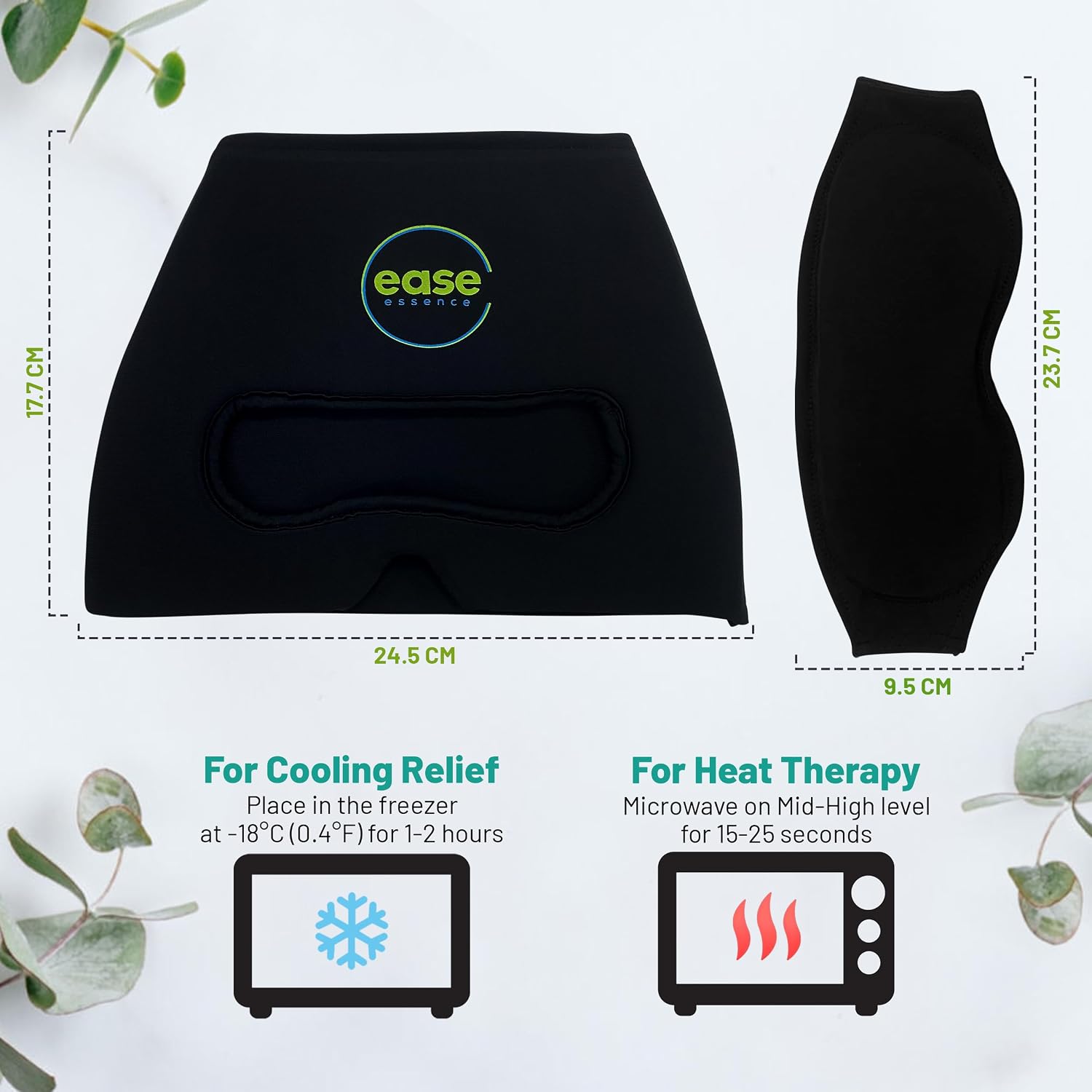
- Freeze correctly. Place the gel cap in the freezer at −18°C (0°F) for one to two hours before use. Do not use dry ice or anything colder than a standard freezer.
- Always use a fabric barrier. Never apply frozen gel directly to bare skin. The cap's built-in fabric lining, or a thin cloth layer, protects against cold burns.
- 15–20 minutes per session. Remove it if the cold becomes uncomfortable, and take a break before repeating. There is no benefit to prolonged exposure.
- Apply early. Cold works best at the first sign of a migraine — aura, a hot temple, the early dull ache — not once the attack has fully set in.
Heat — the key rules
- Microwave with care. The Ease Essence cap can be microwaved on medium-high power for 15–25 seconds. Always check the temperature before placing it on your head — it should feel warm and comfortable, not hot.
- Warm, not burning. Heat therapy is most effective and safest at a gentle, sustained warmth. Very hot application can cause burns and is not more effective than moderate warmth.
- Target the right area. For tension headaches, focus warmth on the back of the neck and shoulders, not just the forehead.
- 15–20 minutes per session. Same principle as cold — short, repeated sessions are better than long continuous exposure.
One cap for both
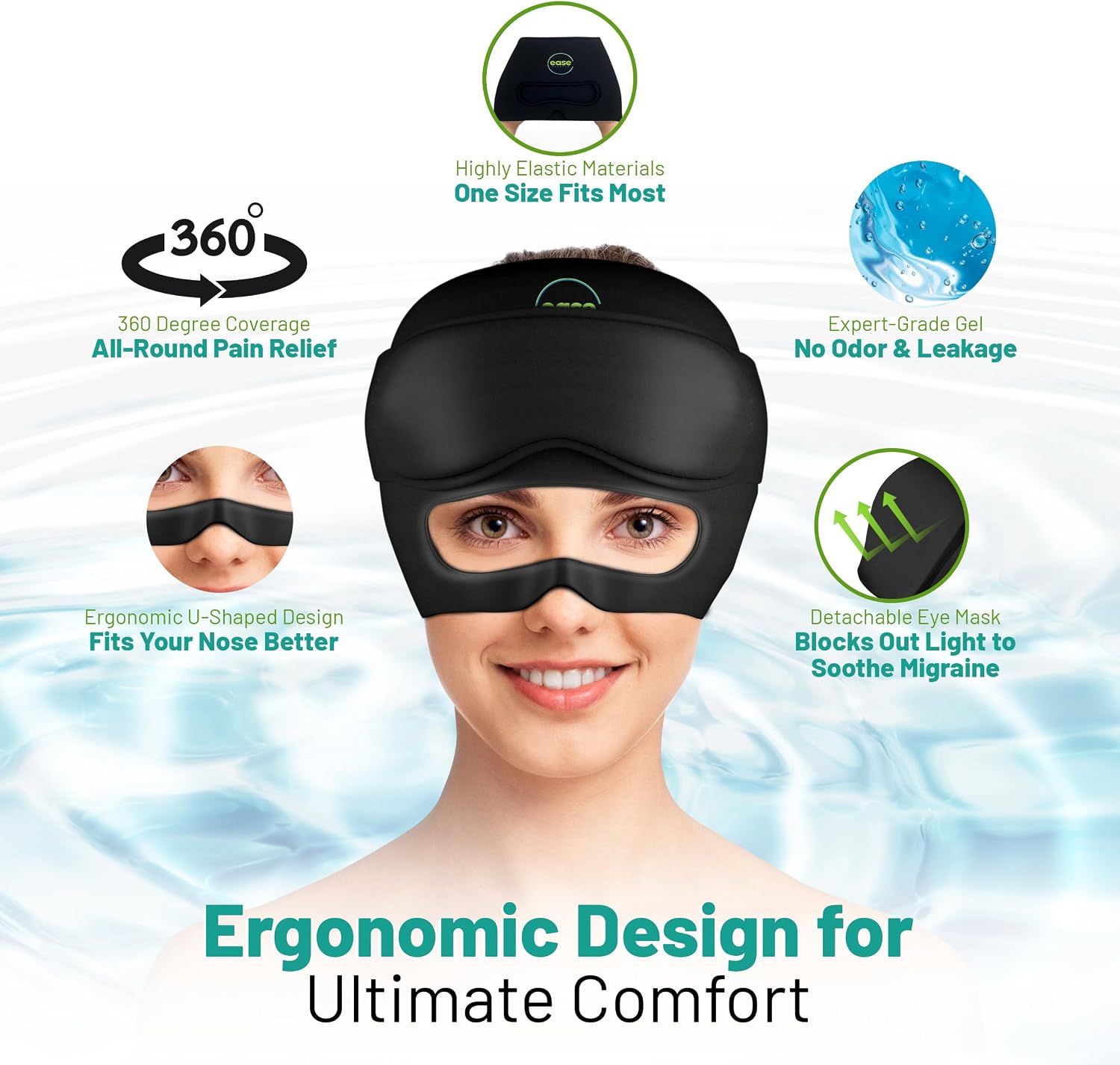
Most people end up with a freezer full of repurposed ice packs and a microwavable heat pad somewhere else in the house — two separate products for two different needs. The Ease Essence Migraine Relief Cap is designed to do both. The gel cap freezes cleanly for cold therapy and microwaves safely for heat therapy. The stretchy 360° design wraps the forehead, temples, and the back of the head, so whether you need cold for a migraine or warmth for a tension headache, the coverage is full and hands-free.
The detachable gel eye mask adds light-blocking for migraines — useful because photophobia (light sensitivity) is one of the most disruptive parts of an attack — and can be chilled separately for targeted use on puffy eyes.
If you share a household with different headache types, a single cap that covers both therapy modes is a practical solution. It is drug-free, reusable, and requires no prescription.
Frequently asked questions
Should I use ice or heat for a headache?
It depends on the headache type. Use cold for migraines, throbbing or pulsing pain, sinus pressure, and puffy eyes — cold constricts dilated vessels and numbs the area. Use heat for tension headaches driven by tight neck or shoulder muscles — warmth increases circulation and helps muscles relax. When in doubt about a throbbing headache, start with cold.
Can I alternate cold and heat for a headache?
Some people find contrast therapy — alternating between cold and heat — helpful, particularly for tension headaches with a throbbing component. Start with cold for 10–15 minutes, then switch to warmth. Keep sessions short, always use a fabric barrier with cold, and avoid heat if your headache is pulsing, as warmth can make vascular headaches worse.
Can the same cap be used for both cold and heat therapy?
Yes. The Ease Essence Migraine Relief Cap is designed for both. For cold therapy, freeze the gel cap at −18°C (0°F) for one to two hours. For heat therapy, microwave the gel cap on medium-high power for 15–25 seconds and check the temperature before use. One cap covers both therapy modes, so you don't need two separate products.
Medical disclaimer: This article is for general education only and is not medical advice. Ease Essence is a drug-free wellness product, not a medical device, and is not intended to diagnose, treat, cure or prevent any disease. If your headaches are frequent, severe, sudden or unusual, please consult a qualified healthcare professional.